
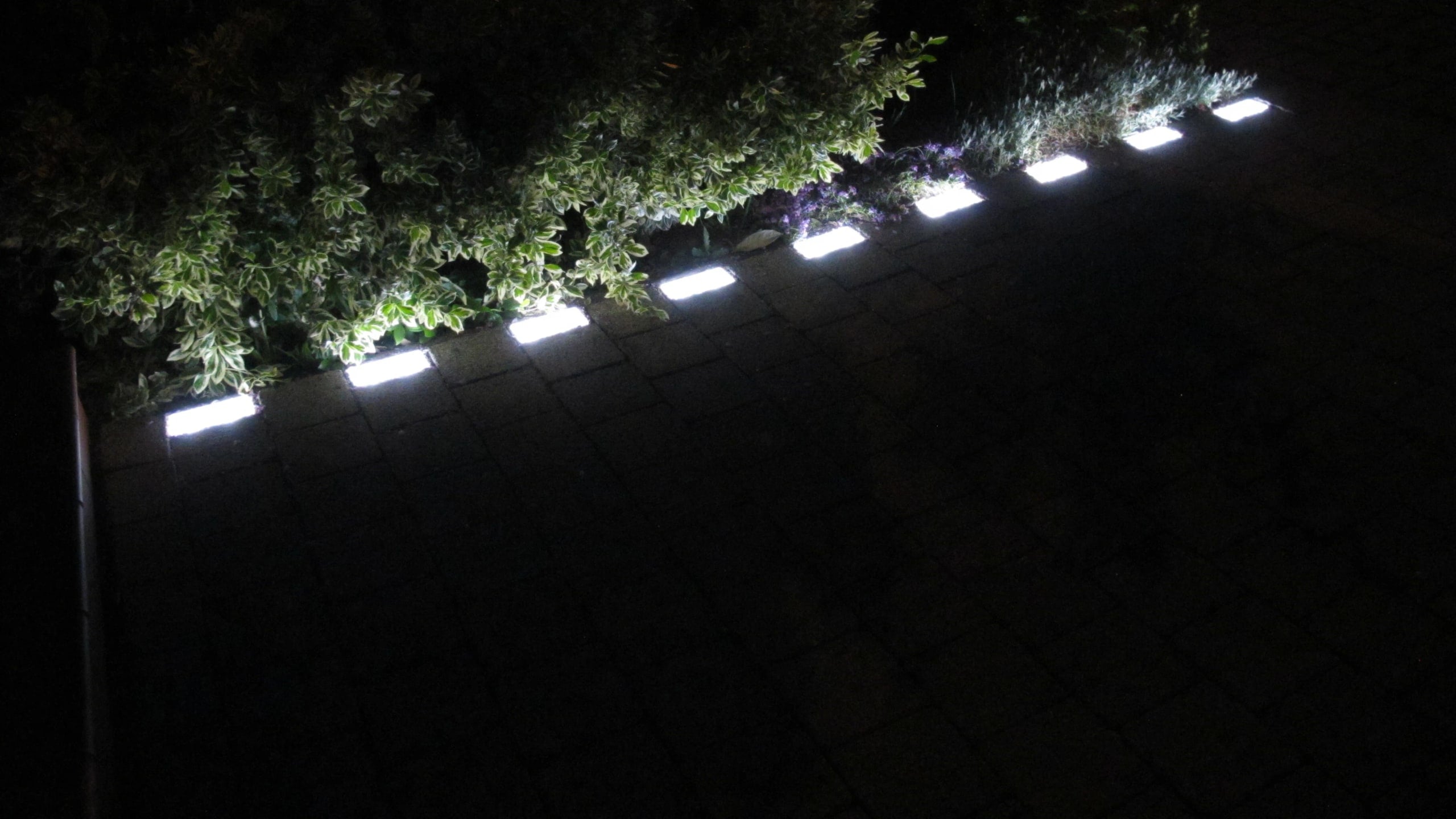
Footpaths
- Beckstone LED Paver Light
A line of light in the path leads through bright and dark sections.
The planning problem
In many urban areas, contact and intersections between pedestrian areas and traffic lanes are unavoidable. The high volume of signs, markings, and warnings in these areas overwhelms the perception of many road users.
This results in numerous accidents, some of which cause serious personal injury, which cannot be avoided by adding more conventional road markings and thus increasing the complexity of traffic situations.
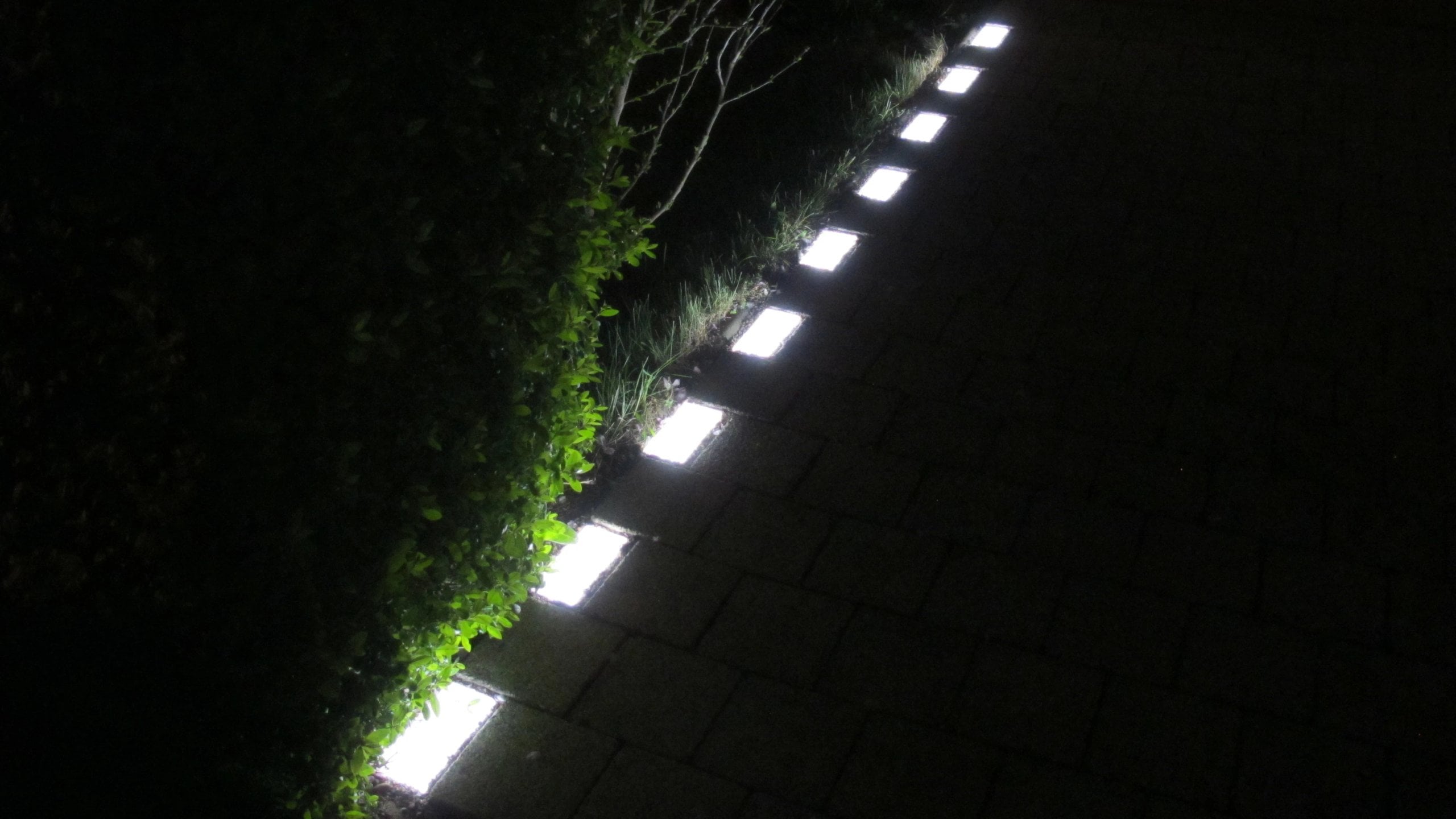
Beckstone
With their unique luminous effect, Paver Lights help to clearly show the structure and layout of larger areas in such danger zones, to highlight particular accident blackspots among the multitude of other road markings, and to create visual barriers that warn pedestrians in particular against carelessly stepping into traffic lanes.
Thanks to their subtle, diffuse luminous effect, Paver Lights are not misunderstood as a binding traffic sign regulating right of way, but are perceived as an orientation aid: When passing through pedestrian zones, Paver Lights alert pedestrians to the possibility of crossing vehicles. Where roadways and sidewalks are separated only by a strip of pavement, Paver Lights warn drivers not to drive over the pedestrian area.
Paver Lights can be used particularly efficiently and cost-effectively in areas with heavy traffic where pedestrians need special protection from accidents.
Suitable lights
Recommendation
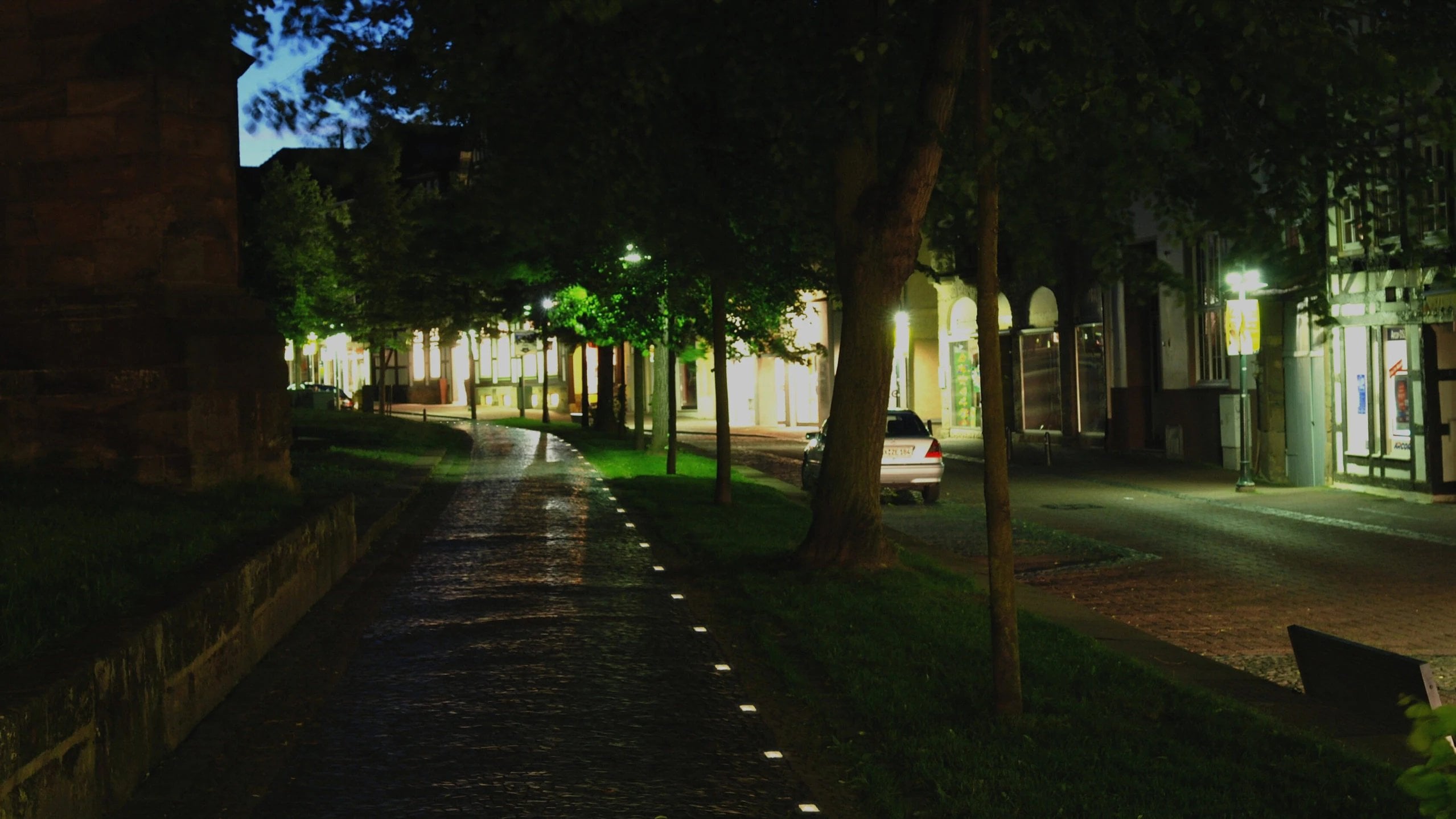
Paver Lights
For paved footpaths: a line of Paver Lights leads along the edge of the path.
Also possible
Road Studs
Where the path has an asphalt surface, Road Studs give the same guidance in the surface.
View Road Studs
- Light colors
- Warm white 2700 K, daylight white 6500 K
- Operating voltage
- 9 to 15 V DC
- Maximum cable length
- 100 m with up to 50 luminaires
- Protection category
- IP68
Installation in three steps.
Set the light into the bedding
The light is laid next to the last paving stone as the paving progresses, with the cable in the sand bed.
Connect electrically
All lights are connected in parallel to the low-voltage main line, which an LED driver supplies.
Grout and compact
The light is grouted with the surrounding paving. Compacting uses a rubber apron after thorough sweeping.
Planning documents (2)
Optimize your traffic safety
Get orientation solutions for complex urban environments.