
Accessibility in public space
- Paver Lights in public transport
Most people with a visual impairment still see something.
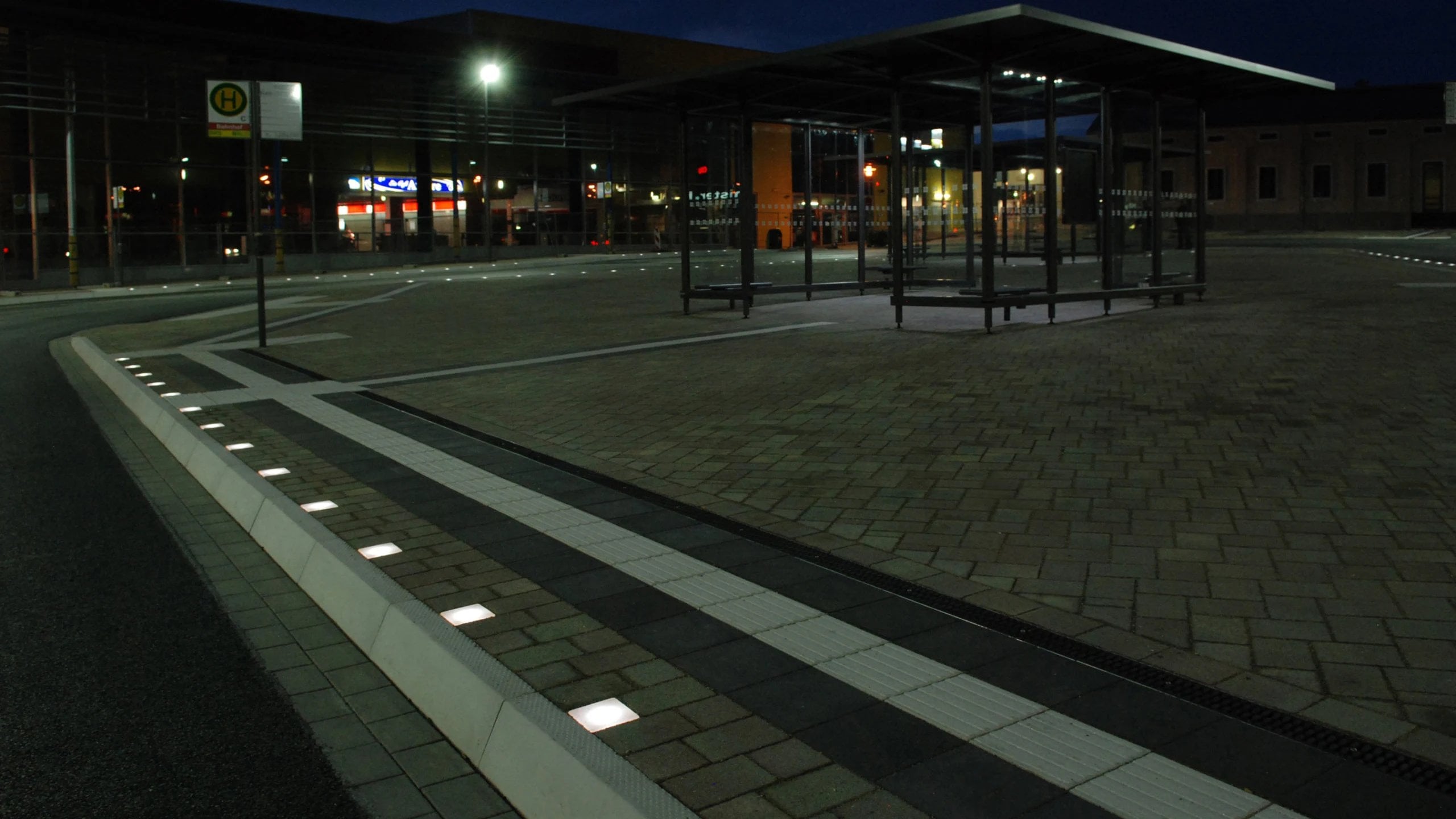
Low vision is rarely no vision
From the world population to blindness
7.8 billionpeople worldwideUnited Nations, World Population Prospects, 2020
596 millionhave impaired distance vision or are blind7.6% of the world population
338 millionhave moderate to severe impairment or are blind4.3% of the world population
43 millionare blind0.55% of the world population
In Germany 558,725 blind and visually impaired people are officially recorded. 87% of them are classed as visually impaired or severely visually impaired, 13% as blind. Most of them still see something.
DBSV, based on German disability statistics, 31 December 2021.
Statistics count only part of the group
German statistics only record people who hold a severe disability card. The German Federation of the Blind and Partially Sighted (DBSV) therefore treats the figures as a lower limit.
Planning also depends on how often people travel. For that we work with an assumption: one trip a month for blind people, three for people with moderate or severe impairment, ten for people with mild impairment. Under this assumption about three in four trips are made by people with mild impairment.
Blind and visually impaired people in Germany
| Group | Sight | People | Share |
|---|---|---|---|
| Visually impaired | at most 30% | 440,645 | 79% |
| Severely visually impaired | at most 5% | 46,820 | 8% |
| Blind | at most 2% | 71,260 | 13% |
| Total | 558,725 | 100% |
Worked example: who waits at the stop, and how often
| Group | People worldwide | Trips per month, assumed | Share of trips |
|---|---|---|---|
| Mild impairment | 258 million | 10 | 74% |
| Moderate to severe impairment | 295 million | 3 | 25% |
| Blind | 43 million | 1 | 1% |
Contrast in the ground
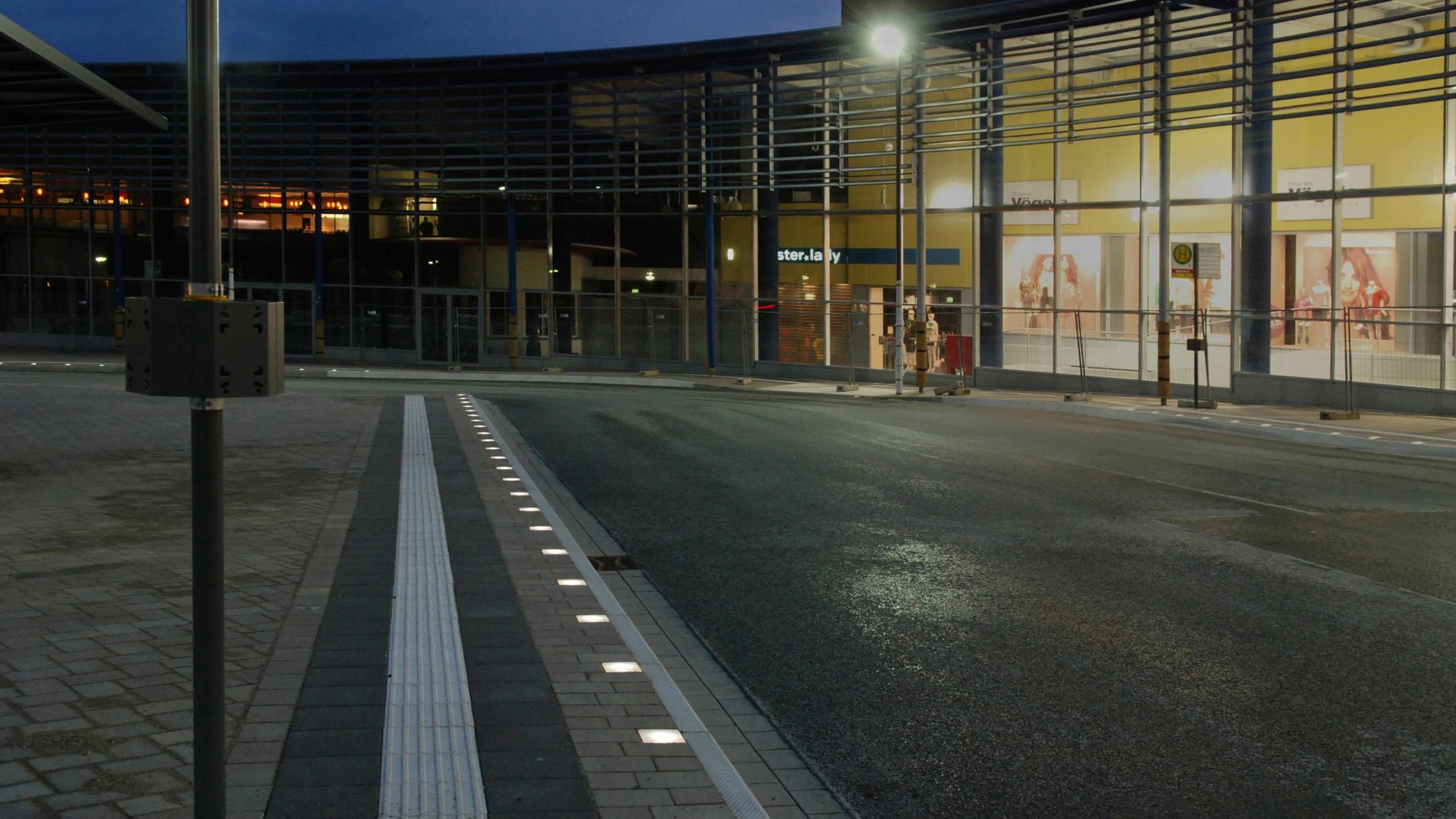
Tactile guidance systems to the German standard DIN 32984 lead the long cane with ribs and studs. People with low vision follow the light and dark contrast between the guidance strip and the paving instead.
Paver Lights bring the contrast into the paving as light: a row of bright points along the curb or the guidance strip. By day they are part of the paving.
Glare-free, not brighter
Many eye conditions make people sensitive to glare. With cataracts, lamps and headlights seem too bright, colors fade and night vision drops. Pole lighting creates bright islands with dark zones in between. Someone sensitive to glare loses the edge in the shadow as light and dark alternate.
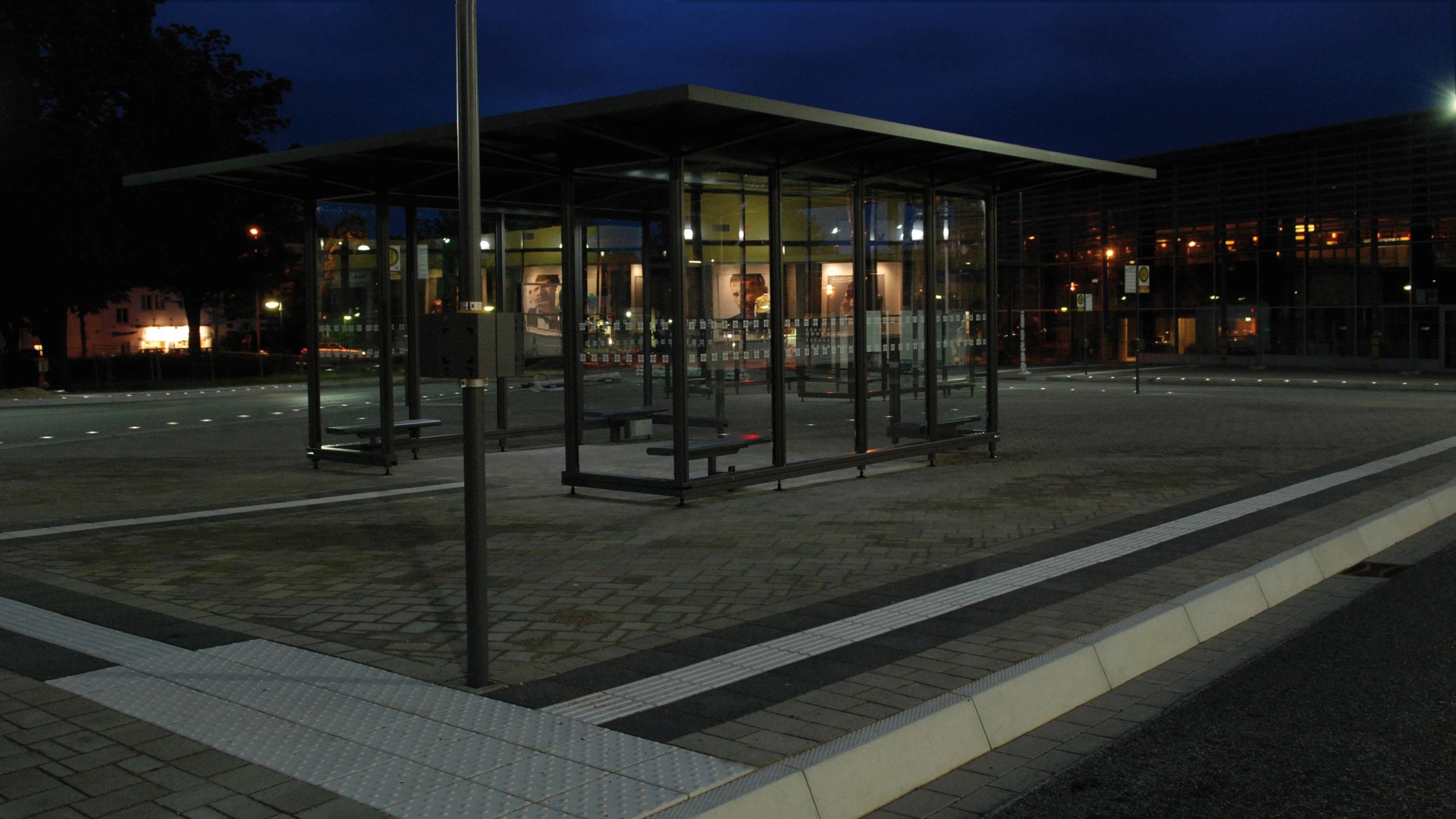
Paver Lights do not replace pole lighting. They add to it where people walk, wait and board.
Orientation with low vision
With cataracts, details blur and contrast drops. What remains are bright points against a dark ground. A line of light in the paving therefore still reads as a direction when the guidance strip next to it has faded into gray.
- Clear sight
- Mild clouding
- Severe clouding
What this means for planning
In Germany the Passenger Transport Act requires the local transport plan to take account of people with limited mobility or sensory impairments. The target was full accessibility by 1 January 2022. Any exception has to be named and justified in the plan.
Most people with a vision impairment are over 50.
Sources
- GBD 2019 Blindness and Vision Impairment Collaborators, Vision Loss Expert Group: Trends in prevalence of blindness and distance and near vision impairment over 30 years. The Lancet Global Health 9 (2021) (opens in a new tab), pp. e130 to e143.
- United Nations: World Population Prospects (opens in a new tab). World population in 2020 about 7.8 billion.
- Deutscher Blinden- und Sehbehindertenverband (DBSV): Zahlen und Fakten (opens in a new tab). Definitions and German disability statistics, 31 December 2021.
- World Health Organization (WHO): Blindness and vision impairment (opens in a new tab), fact sheet of 10 February 2026.
- National Eye Institute (NEI): Cataracts (opens in a new tab), symptoms.
- German Passenger Transport Act: Personenbeförderungsgesetz (PBefG) (opens in a new tab), section 8 (3).